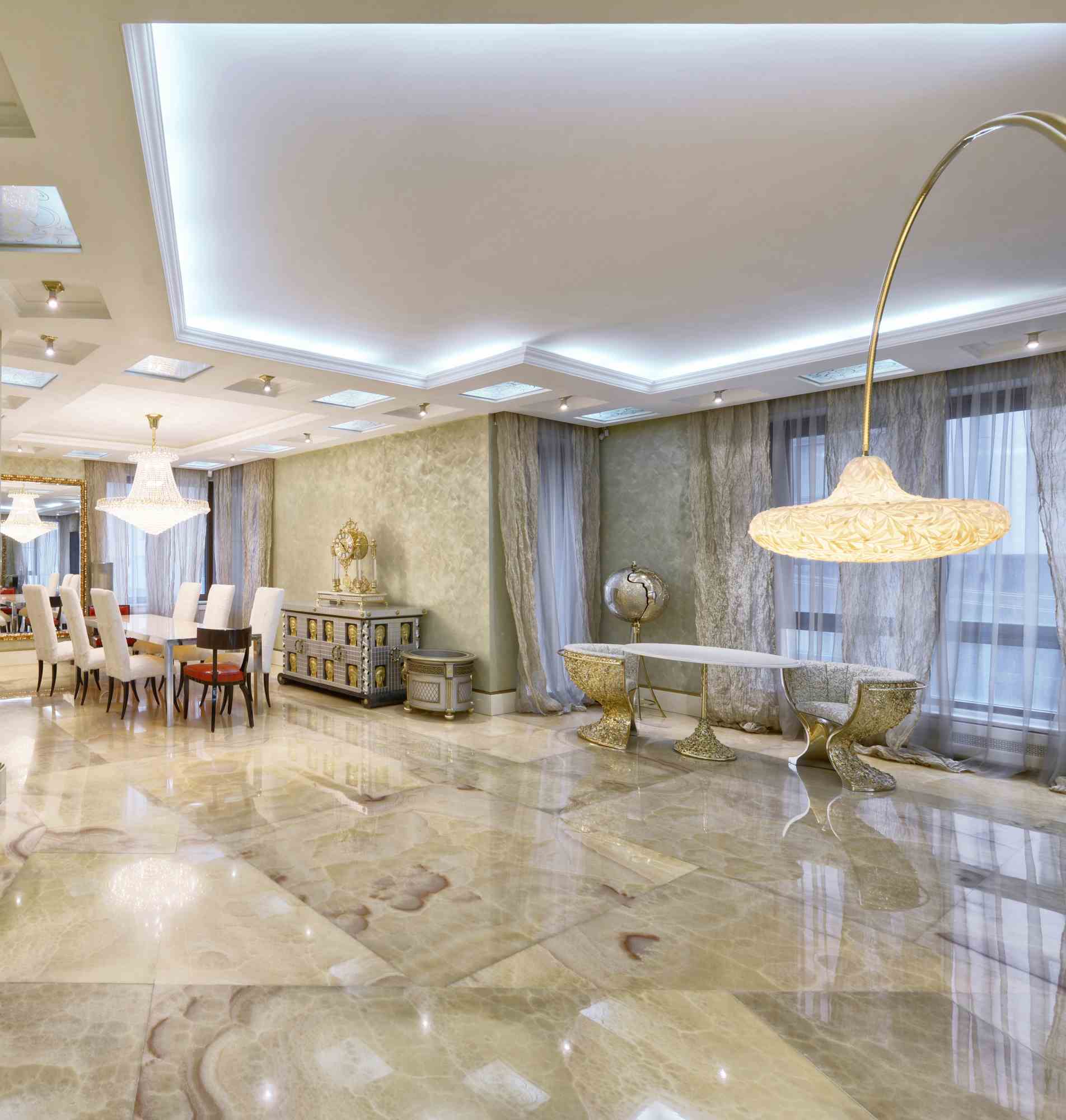
Honey Onyx
Honey Onyx Stone
Honey onyx, as the name suggests, is a valuable variety of onyx stone known for its yellow and amber colors in honey tones. It is frequently used to create a luxurious effect in interiors with its natural beauty and warm tones.
Physical Properties
Honey onyx is a type of limestone composed of calcium carbonate (CaCO₃) mineral. It is known for its translucent structure, light-transmitting property, and honey-colored shades. It has a value between 3-4 on the Mohs hardness scale, making it a medium-hardness stone.
Areas of Use
Honey onyx stone is used in various decorative and building applications:
- Interior wall coverings
- Flooring
- Bathroom and kitchen countertops
- Decorative objects and souvenirs
- Lighting elements
- Jewelry making
It is preferred for bar counters, reception desks, and decorative panels, especially as it creates a magnificent effect when backlit.
Origin and Extraction Locations
Honey onyx stone is found in various regions of the world. Turkey, Iran, Pakistan, Mexico, and Italy are among the main producer countries. Turkey's Afyon, Burdur, and Balıkesir regions are known for their quality honey onyx deposits.
Maintenance and Protection
This stone, which can be affected by acidic substances, requires regular maintenance. It should be cleaned with special stone cleaners and its surface should be regularly polished. As it is sensitive to scratches, contact with hard objects should be avoided.
Cultural and Spiritual Value
Throughout history, onyx stone has been seen as a symbol of protection and power in various cultures. Honey onyx stone is particularly believed to bring energy and joy of life and increase one's self-confidence.
This unique natural stone is a perfect choice to add warmth and elegance to your spaces with both its decorative properties and the natural beauty it carries.
Architectural Uses of Honey Onyx Stone
Honey onyx stone is a valuable material with versatile use in architectural applications. I can explain its areas of use in architecture in more detail:
Interior Use
Wall Coverings
Honey onyx is especially used to create accent walls in interiors. Thanks to its translucent property, it can create a dramatic effect when backlit, making it preferred in luxury hotel lobbies, VIP sections of restaurants, and living rooms of high-end residences.
Flooring
Polished honey onyx is used as spectacular flooring in luxury spaces. It is frequently preferred especially in entrance halls, foyers, and reception areas. However, since it is sensitive to scratching, it is generally used with a protective polish in areas exposed to heavy traffic.
Bathroom and Kitchen Applications
Honey onyx is used in shower cabins, bathtub surroundings, and sink countertops in luxury bathroom designs. In kitchens, it provides an eye-catching appearance on island counters, splash-backs, and countertops.