Coffee Wood
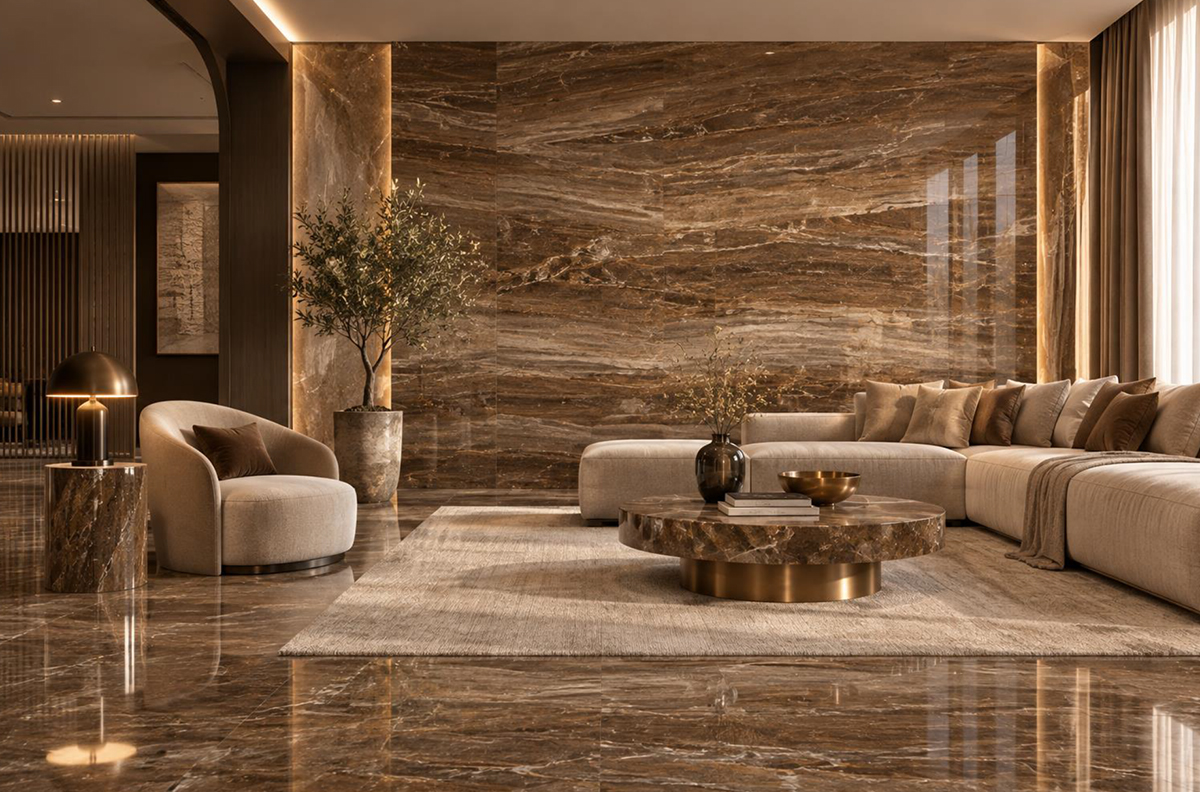
Coffee Wood Limestone is one of the most striking natural stones to emerge in interior design in recent years, distinguished by its warm coffee tones and dramatic veining that evokes the texture of wood. It takes its name from the unique "coffee tree" appearance created by the horizontal lines running across its surface and the layered strata in varying shades of brown. Limestone-based in origin, this stone was formed through millions of years of geological pressure and heat; the natural ombré effect within its veins makes it impossible for even two blocks to be identical.
Visual Characteristics
The greatest allure of Coffee Wood lies in its natural pattern, which genuinely resembles wood. The base color is typically a blend of warm coffee, hazelnut, and beige tones, while the dark, straight, parallel veins running across it recall the growth rings of timber. These veins lend the stone both depth and movement. The soft ombré transitions that appear on the surface depending on the angle of light bring a natural richness and timeless warmth to any space in which it is used.
Technical Properties and Durability
Coffee Wood Limestone is among the more robust members of the limestone family. Thanks to its dense structure, it retains its form and aesthetic for many years in interior applications. Its resistance to heat makes it a preferred material for applications such as countertops and fireplace surrounds. It is generally offered on the market in slab form at thicknesses of 2 cm and 3 cm; it can also be processed into tiles, mosaics, or custom dimensions as required.
As a natural stone, it has a porous structure. For this reason—particularly in wet areas such as kitchens and bathrooms—applying an impregnating sealer at regular intervals (typically every 1–2 years) is important for the stone's longevity and for preserving the vibrancy of its color.
Surface Finish Options
Coffee Wood's versatile character allows for entirely different atmospheres to be created through various surface treatments:
- Polished: Brings out the depth of the veins and the color transitions in their most vivid form; ideal for luxurious and modern spaces.
- Honed: Offers a matte, smooth touch; harmonizes beautifully with minimalist and natural interior designs.
- Brushed or Leathered: Adds a subtle texture to the surface; preferred for rustic and organic concepts.
- Tumbled or Sandblasted: Suitable for antique and traditional looks.